
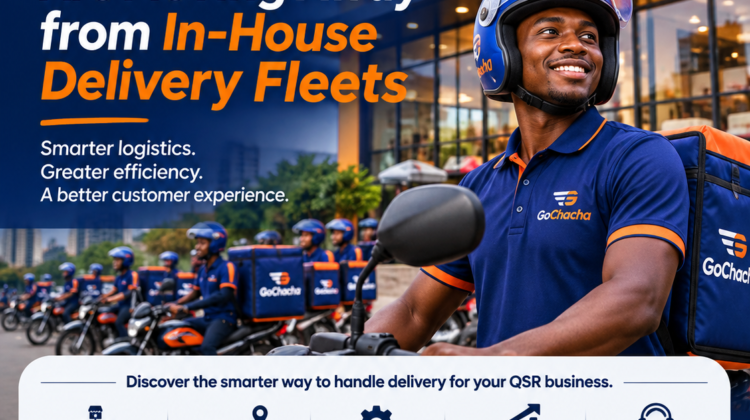
Why Lagos QSR Franchises Are Moving Away from In-House Delivery Fleets
Why Lagos QSR Franchises Are Moving Away from In-House Delivery Fleets
For many Quick Service Restaurants (QSRs) in Lagos, expanding from one location to multiple branches is an important business milestone. More outlets mean greater market reach, increased customer access, and opportunities to grow revenue. However, expansion also introduces an operational challenge that many restaurant businesses underestimate: delivery logistics.
As customers increasingly expect convenient food delivery, restaurant franchises must find reliable ways to move orders from their kitchens to customers across different parts of the city. What works for one restaurant location may become difficult to maintain when operations extend to Ikeja, Lekki, Surulere, Victoria Island, and other commercial areas.
Traditionally, many restaurants have relied on in-house delivery fleets to manage this responsibility. They recruit riders, purchase or lease motorcycles, handle maintenance, monitor delivery activities, and coordinate orders internally.
While this approach provides direct control, it also creates additional responsibilities that can become expensive and difficult to manage as the business grows.
This is why third-party logistics is becoming an important consideration for restaurant operators looking to improve delivery efficiency, manage operational expenses, and concentrate on their core business.
The question for modern QSR franchises is no longer simply whether to maintain an in-house fleet. It is whether managing every aspect of delivery internally remains the most practical option as the business expands.
The Hidden Cost of Running an In-House Delivery Fleet
At first glance, managing an internal delivery fleet may appear more economical than outsourcing deliveries. A restaurant has its own riders, controls its motorcycles, and manages its delivery processes directly.
However, the actual cost of running a fleet goes beyond paying riders.
Restaurant operators must consider the expenses associated with acquiring motorcycles, fuel consumption, regular servicing, replacement parts, insurance, rider onboarding, safety equipment, and administrative supervision.
These expenses continue even when delivery demand fluctuates.
For example, a restaurant with several branches may need to maintain a certain number of riders to handle peak periods. During quieter periods, some of those resources may not be fully utilised.
The business still carries the responsibility of managing its fleet, regardless of how many delivery requests come in.
For growing restaurant franchises, these costs can become a significant part of operating expenses.
The challenge is not necessarily that in-house delivery is ineffective. It is that the model requires continuous investment, coordination, and supervision to remain efficient.
1. Managing Riders Across Multiple Branches Becomes Complicated
Operating a single restaurant outlet presents a relatively straightforward delivery structure. Orders come in, available riders are assigned, and deliveries are completed.
However, a franchise operating multiple branches across Lagos has a more complicated arrangement.
Each location may have different delivery volumes, customer locations, traffic conditions, and rider requirements.
For instance, a restaurant operating in Ikeja may experience different delivery patterns from another branch in Lekki or Surulere.
Managing these locations independently can result in uneven rider distribution. One branch may have more riders than it needs, while another struggles to fulfil incoming orders.
This creates a coordination problem that becomes more demanding as the business expands.
A more centralised logistics structure can help restaurant operators approach delivery management from a broader perspective, rather than treating every branch as an entirely separate operation.
With better coordination, businesses can work towards improving rider allocation, monitoring delivery activities, and identifying operational gaps across their locations.
2. Motorcycle Maintenance Can Reduce Operational Efficiency
A delivery motorcycle is a business asset, but it also comes with recurring responsibilities.
Motorcycles used for daily commercial deliveries require regular maintenance to remain reliable. Engine servicing, tyre replacement, brake repairs, fuel expenses, and unexpected mechanical issues all contribute to the overall cost of fleet ownership.
When a motorcycle breaks down, it can affect more than the rider. It may delay customer orders, disrupt dispatch schedules, and place additional pressure on the remaining fleet.
For franchises operating several locations, managing these issues across multiple motorcycles can become an administrative burden.
Restaurant management teams must monitor vehicle conditions, organise repairs, and ensure that enough motorcycles remain available to support delivery operations.
Working with a third-party logistics provider may allow a restaurant to reduce its direct responsibility for maintaining an entire delivery fleet.
The exact savings depend on the provider’s pricing and service arrangement, but businesses gain an opportunity to compare fleet ownership costs against outsourced delivery expenses.
3. Expanding Into New Locations Requires a Different Logistics Strategy
Restaurant expansion is not simply about opening another branch. Every new location introduces additional operational requirements.
A franchise expanding across Lagos must consider how orders will be collected, how riders will be assigned, which areas can be served, and how delivery performance will be managed.
Building an entirely new in-house delivery operation for every branch may require additional motorcycles, riders, supervision, and maintenance resources.
This can slow down expansion and increase the amount of capital required to support new locations.
Third-party logistics partnerships offer an alternative worth considering.
Instead of independently building a delivery fleet at every new outlet, a restaurant can explore working with a logistics partner that has the relevant operational capacity and geographic coverage.
This approach may make it easier to assess new delivery locations without immediately committing to the full cost of establishing an internal fleet.
However, restaurant operators should confirm the provider’s actual coverage, rider availability, delivery capacity, and service expectations before relying on the arrangement.
4. Delivery Operations Can Distract Restaurants From Their Core Business
The primary responsibility of a restaurant is to prepare quality food, maintain service standards, and create a positive customer experience.
However, managing an in-house delivery fleet introduces several additional responsibilities.
Restaurant managers may need to handle rider attendance, delivery complaints, motorcycle issues, dispatch assignments, and customer delivery enquiries.
These activities can take time away from kitchen operations, staff supervision, inventory management, and other important business functions.
As a restaurant expands, management must decide where its attention and resources will create the greatest value.
Outsourcing selected logistics responsibilities can help reduce the number of operational activities handled internally.
This does not mean restaurants should surrender control over their customer experience. They still need to monitor delivery performance, maintain service standards, and ensure that their logistics partner meets agreed expectations.
The objective is to allow restaurant teams to focus more effectively on food operations while working with a specialised provider to support delivery fulfilment.
5. Technology Is Changing How Restaurant Deliveries Are Managed
Modern restaurant logistics requires more than assigning a rider to collect an order.
As QSR businesses grow, they need better ways to coordinate delivery requests, monitor operational activities, and connect different branches.
Traditional dispatch processes that rely heavily on phone calls, spreadsheets, and manual communication can become difficult to manage at scale.
Technology-enabled logistics systems can help address some of these challenges.
Depending on the platform and its capabilities, businesses may benefit from:
- Centralised dispatch management.
- Digital delivery request handling.
- Rider allocation and coordination.
- Delivery status monitoring.
- Operational reporting and delivery records.
- Integration with restaurant ordering systems through APIs.
API integration is particularly relevant for established QSR franchises.
An API can allow compatible restaurant systems and logistics platforms to exchange information. For example, an integrated workflow could transfer order details from a restaurant’s ordering system into a delivery management system.
This can reduce repetitive manual entry and improve coordination between restaurant teams and delivery operations.
For enterprise businesses processing orders across several branches, this type of integration can become an important part of building a more connected operation.
However, integration requirements differ between businesses. Restaurants should assess compatibility, implementation costs, security, and the actual capabilities offered by their logistics provider.
6. Third-Party Logistics Offers an Alternative to Fleet Ownership
One reason businesses consider third-party logistics is the opportunity to access delivery services without independently managing every aspect of fleet ownership.
Instead of purchasing motorcycles, recruiting riders, and supervising the entire delivery operation internally, a restaurant can enter into a commercial arrangement with an external logistics provider.
Depending on the agreement, the provider may support rider coordination, dispatch operations, delivery fulfilment, and other logistics requirements.
This can create a different cost structure for restaurant businesses.
Rather than concentrating their investment on maintaining an internal fleet, operators can evaluate delivery service charges against the cost of running their own vehicles and managing riders.
However, outsourcing should not be viewed as an automatic cost-saving solution.
A restaurant must compare the total cost of each model, including delivery fees, minimum service commitments, additional charges, service availability, and the potential impact on customer satisfaction.
The best logistics arrangement is the one that supports the restaurant’s operational requirements and makes commercial sense.
7. In-House Delivery vs Third-Party Logistics: Which Is Better for Your QSR?
There is no single delivery model that works for every restaurant.
A small restaurant with a limited delivery area may find an in-house fleet practical. A large franchise with multiple branches may prefer an external logistics partner or a combination of both approaches.
The decision should be based on delivery volume, branch locations, operating expenses, customer expectations, and the level of control the business wants to maintain.
| Business consideration | In-house delivery fleet | Third-party logistics |
|---|---|---|
| Motorcycle ownership | Restaurant manages its fleet | Provider may supply delivery capacity |
| Rider recruitment | Managed internally | May be handled by provider |
| Maintenance | Restaurant bears responsibility | Depends on provider’s arrangement |
| Delivery coordination | Managed by restaurant teams | Can be supported by external dispatch systems |
| Expansion | May require additional fleet investment | May provide access to existing delivery capacity |
| Cost structure | Fixed and variable fleet expenses | Service fees and agreed commercial charges |
| Operational control | Direct internal control | Governed by the partnership agreement |
Some franchises may find a hybrid model more suitable.
For example, a restaurant could maintain a small internal fleet for its regular delivery operations while using an external logistics partner to support additional demand or selected locations.
This provides an opportunity to balance operational control with access to external delivery capacity.
8. What Should Lagos QSR Franchises Look for in a Logistics Partner?
Moving away from a fully in-house fleet requires careful planning.
A logistics partner becomes part of the restaurant’s customer fulfilment process. Therefore, choosing the right provider is an important business decision.
Before entering into a partnership, restaurant operators should evaluate several factors.
Geographic coverage: Does the provider operate in the locations where your branches are situated? Can it support your current and planned expansion areas?
Delivery capacity: Can the provider support your expected order volumes during normal and peak operating periods?
Dispatch coordination: Does the provider have a structured approach to receiving requests and assigning riders?
Technology capabilities: Can its systems support the level of order visibility, reporting, and integration your business requires?
Service reliability: How does the provider manage delays, failed deliveries, customer complaints, and other operational challenges?
Commercial structure: Are delivery charges, additional fees, service commitments, and payment arrangements clearly defined?
Scalability: Can the partnership accommodate additional branches as the restaurant expands?
A reliable logistics partnership should be based on measurable operational expectations, clear communication, and a shared understanding of service standards.
How GoChacha Fits Into the Future of Restaurant Logistics in Lagos
As QSR franchises expand across Lagos, the need for organised and dependable last-mile delivery becomes increasingly important.
GoChacha Express Logistics is focused on supporting delivery needs across the Lagos business environment.
For restaurant chains and enterprise food businesses, the opportunity is to explore a logistics arrangement that considers more than individual delivery requests.
Businesses need to think about branch coordination, rider allocation, delivery coverage, dispatch processes, and the technology required to connect their operations.
GoChacha’s enterprise logistics approach is built around these important considerations, including centralised dispatch, dedicated fleet routing, and API integration as part of the proposed service framework.
For QSR operators considering a change to their delivery model, the first step is understanding their current operational challenges.
How many branches require delivery support? What are the busiest delivery periods? Which locations need coverage? What systems does the restaurant currently use to process orders?
Answering these questions can help determine the type of logistics arrangement that makes sense for the business.
Rather than making a decision based solely on delivery price, restaurant operators should consider the wider value of a logistics partner in supporting their operations.
Final Thoughts: Is It Time to Rethink Your In-House Delivery Fleet?
Managing an in-house delivery fleet can work for restaurants with the right resources and operational structure. However, as QSR franchises expand across Lagos, the demands of fleet ownership can become increasingly difficult to manage.
Motorcycle maintenance, rider recruitment, branch coordination, dispatch supervision, and technology requirements all contribute to the complexity of running an internal delivery operation.
Third-party logistics provides another option for businesses looking to review these responsibilities and explore a more flexible approach to delivery management.
For some restaurants, outsourcing may be the right decision. For others, a hybrid model may offer a better balance between internal control and external support.
What matters is choosing a delivery structure that supports the restaurant’s growth, protects the customer experience, and makes financial sense.
Your business is built around serving great food. Your logistics strategy should make getting that food to customers easier.
Are you managing delivery operations across multiple restaurant branches in Lagos?
Talk to GoChacha about enterprise logistics solutions designed around your business needs.
GoChacha Logistics — Send an Angel.
